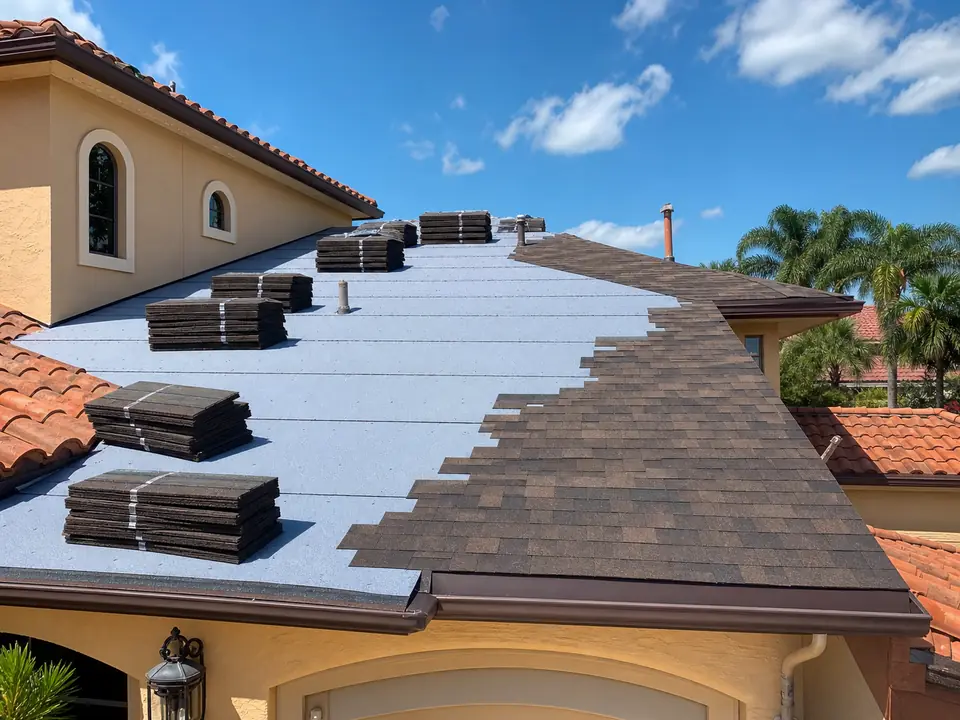
A replacement also gives access to the roof deck and allows new underlayment, flashing and roofing material to be installed together.
How to Decide Whether to Replace the Roof
Age is useful background information, but condition matters more.
A relatively old roof may still have one repairable problem.
Another roof of similar age may already have several leaks, widespread deterioration and numerous previous repairs.
The pattern of failure provides better information than the calendar alone.
Replacement becomes easier to justify when:
- roofing deterioration affects broad areas
- different sections are beginning to fail
- repairs are becoming frequent
- new materials cannot be integrated reliably into the existing roof
- storm damage affects a substantial portion of the system
- underlying roof conditions require broader work
What Happens During Roof Replacement?
Existing Roofing Is Removed as Required
Removal gives access to components that are normally hidden.
The scope depends on the existing roof and the replacement system being installed.
The Roof Deck Is Evaluated
Decking supports the roofing system.
Areas damaged by moisture or deterioration need to be addressed before new roofing covers them.
Deck replacement should be handled according to the project contract so owners understand how unforeseen areas are approved and priced.
Underlayment Is Installed
Underlayment provides a secondary layer beneath the main roof covering.
Its type and installation depend on the roofing system, slope and applicable requirements.
Roof Edges Are Prepared
Eaves and rakes experience significant wind and water exposure.
Starter material and edge details need to work with the field roofing rather than being treated as an afterthought.
Flashing and Penetrations Are Addressed
Walls, pipes, vents, valleys and other roof interruptions need proper transitions into the new roofing.
Known weak details should not simply be buried beneath new material.
New Roofing Is Installed
Shingles, metal panels, tile or commercial membrane are installed according to the selected system.
Final Details Are Completed
Ridges, hips, transitions and other finish components complete the assembly.
What Happens if Damaged Decking Is Found?
Some decking problems are visible before work begins.
Others only become apparent after the roof covering has been removed.
Soft, deteriorated or structurally unsuitable areas need to be evaluated before the new roofing goes on.
This is why a replacement estimate should clearly explain how unforeseen decking replacement will be handled.
The customer should not discover the process only after the old roof is already off.
Roof Ventilation During Replacement
Roof replacement is a useful time to evaluate existing ventilation where the building uses a vented attic assembly.
More vents are not automatically better.
Intake and exhaust need to work together, and the approach should suit the roof and attic design.
Existing ventilation conditions should be considered as part of the roofing project rather than treated as an unrelated accessory.
Shingle Roof Replacement
Shingle replacement includes much more than the field shingles.
Depending on the system, the project also includes starter material, underlayment, flashing and ridge or hip components.
Correct fastening matters as well.
The roof should be installed according to the requirements of the selected product rather than assuming every shingle system is identical.
Metal Roof Replacement
Metal roofing requires more planning around panel layout and roof details.
Important questions include:
- Which metal system is being installed?
- How are the panels attached?
- How is thermal movement accommodated?
- How will walls and valleys be flashed?
- How are penetrations handled?
- How does the roof terminate at the eaves and ridge?
Metal quality matters, but the roof will still depend heavily on these installation details.
Shingles or Metal?
Neither material is automatically the right answer.
Shingles may appeal to owners looking for a familiar residential appearance and a lower initial project cost.
Metal may make sense for owners who prefer its appearance, system design and different long-term maintenance characteristics.
Roof geometry, budget and expected ownership period should all be part of the decision.
Roof Replacement FAQs
Does one leak mean I need a new roof?
No. A localized failure can often be repaired.
Can I switch from shingles to metal?
Often, provided the roof and selected system are suitable. The transition should be planned rather than treated as a simple material swap.
Will I know about damaged decking before work starts?
Not always. Some areas only become visible after existing roofing is removed.
Should old flashing be reused?
Flashing should be evaluated as part of the replacement. Known or deteriorated weak points should not simply be carried into the new roof.
Does reroofing require permits?
Reroofing work in Laredo may require municipal permits and inspections depending on the project. Applicable requirements should be confirmed for the specific roof before work begins.