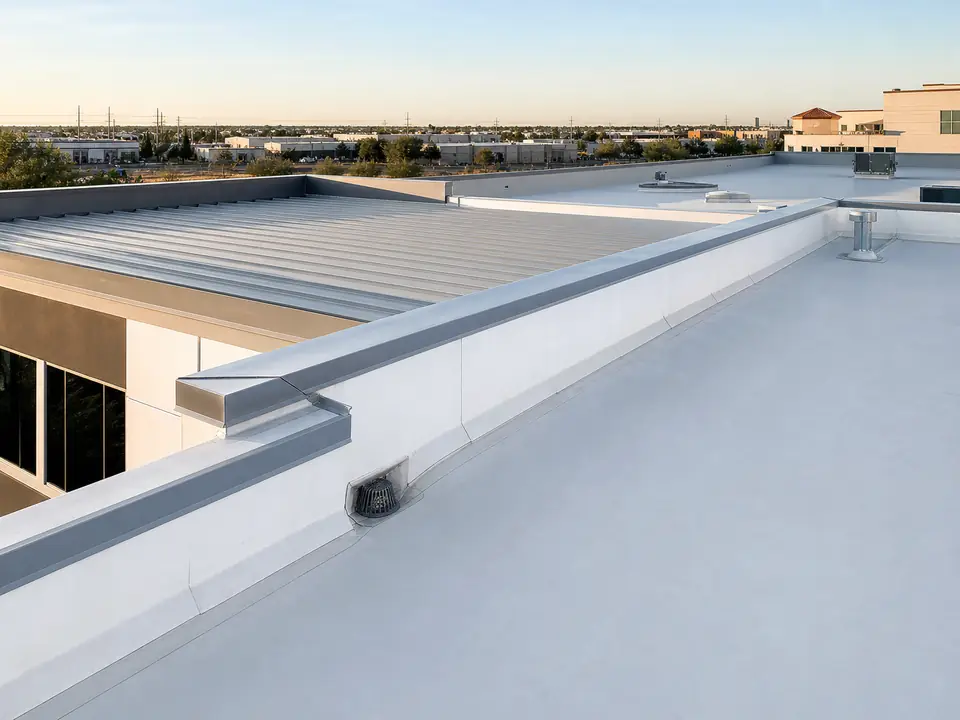
Correct repair begins by identifying the roofing material and understanding how water moves across the roof.
Not All Flat Roofs Are the Same
A low-slope building may use:
- TPO
- modified bitumen
- metal
- another membrane
- a previously coated roof
The roof covering needs to be identified before compatible repair materials can be selected.
Drainage
Low-slope roofs rely heavily on drainage details because water moves more slowly than it does on a steep residential roof.
Drains, scuppers and roof slope all influence where water goes.
If one area repeatedly holds water, the cause needs to be investigated.
Possible factors include:
- obstructed drains
- structural deflection
- roof geometry
- insulation or taper design
- other building conditions
Membrane Seams
Many low-slope systems contain seams joining separate pieces of roofing material.
Those seams need to remain intact throughout the life of the roof.
The construction and repair method depends on the membrane.
TPO seams are not repaired in the same way as modified-bitumen laps.
Penetrations and Rooftop Equipment
Pipes, vents, curbs and roof hatches interrupt the low-slope membrane.
These details are common areas for leak investigation because water may remain around them longer than on a steep roof.
Parapets and Perimeter Conditions
Many commercial roofs terminate at parapet walls rather than open eaves.
The transition from horizontal membrane to vertical wall needs properly integrated flashing.
Perimeter areas also experience significant wind forces and deserve attention during inspections.
Flat Roof Repair
Repair can be practical when the leak is localized and surrounding roofing remains suitable.
The roofer identifies the system, locates the defect, prepares the area and uses compatible repair materials.
Flat Roof Replacement
Replacement becomes more appropriate when deterioration, moisture or recurring leaks affect enough of the assembly that isolated repair is no longer effective.
The replacement plan should also review drainage, rooftop equipment and perimeter details rather than simply installing another membrane over unresolved conditions.