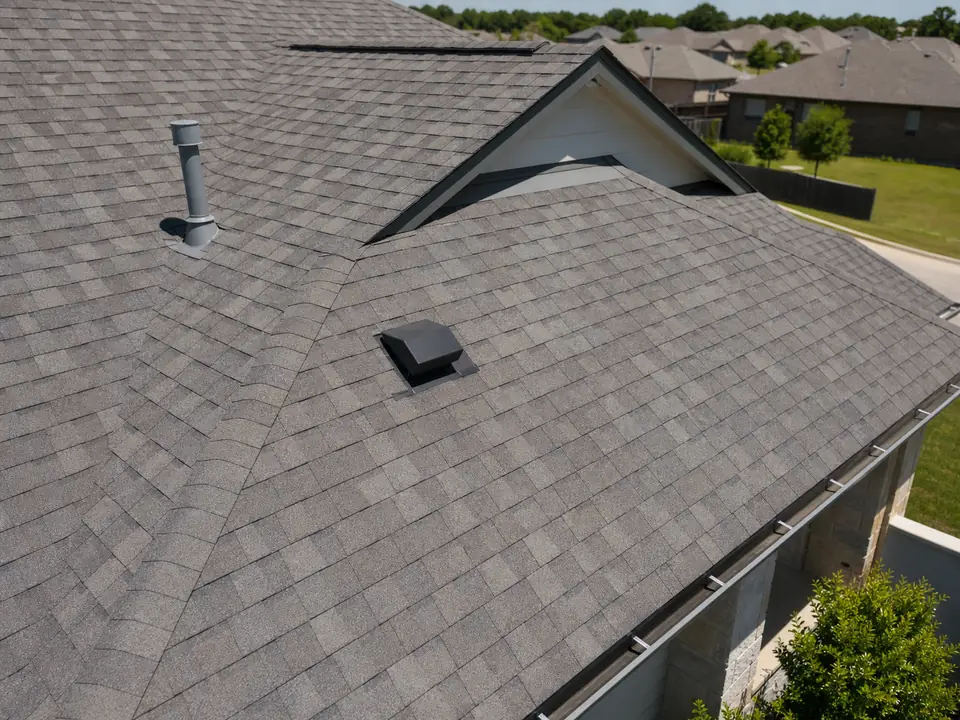
The inspection varies with the roof, but commonly includes:
- shingles, metal or tile
- roof edges
- valleys
- ridges and hips
- wall flashing
- plumbing vents
- other penetrations
- previous repairs
- visible damage or deterioration
If a leak is the reason for the inspection, interior evidence is compared with exterior roof conditions.
Interior and Attic Evidence
When attic access is available and appropriate, the underside of the roof can provide useful information.
The inspection may reveal:
- staining on decking
- moisture patterns
- previous leak areas
- daylight around penetrations
- signs that water has traveled away from the exterior entry point
Not every roof provides safe or practical attic access, so the inspection method should suit the building.
Storm Inspections
After hail or high winds, the inspection can focus on:
- displaced roofing
- roof-edge conditions
- visible impact marks
- metal components
- flashing
- penetrations
- commercial membrane damage
The purpose is to document present conditions rather than assume the storm caused everything visible on the roof.
Inspection Before Roof Replacement
A replacement estimate benefits from knowing as much as possible about the existing roof.
The roofer can review:
- existing material
- approximate number of roofing layers where apparent
- penetrations
- flashing
- roof geometry
- access
- visible deck concerns
- ventilation conditions
- commercial rooftop equipment
Some concealed conditions will only become visible after removal begins, but a thorough preliminary inspection reduces surprises.
Commercial Roof Inspections
Commercial inspections place additional emphasis on:
- seams
- roof drains
- scuppers
- parapets
- equipment curbs
- penetrations
- service traffic areas
- previous patches
- membrane condition
- perimeter details
Photographs and notes can be particularly useful for tracking changes over time.