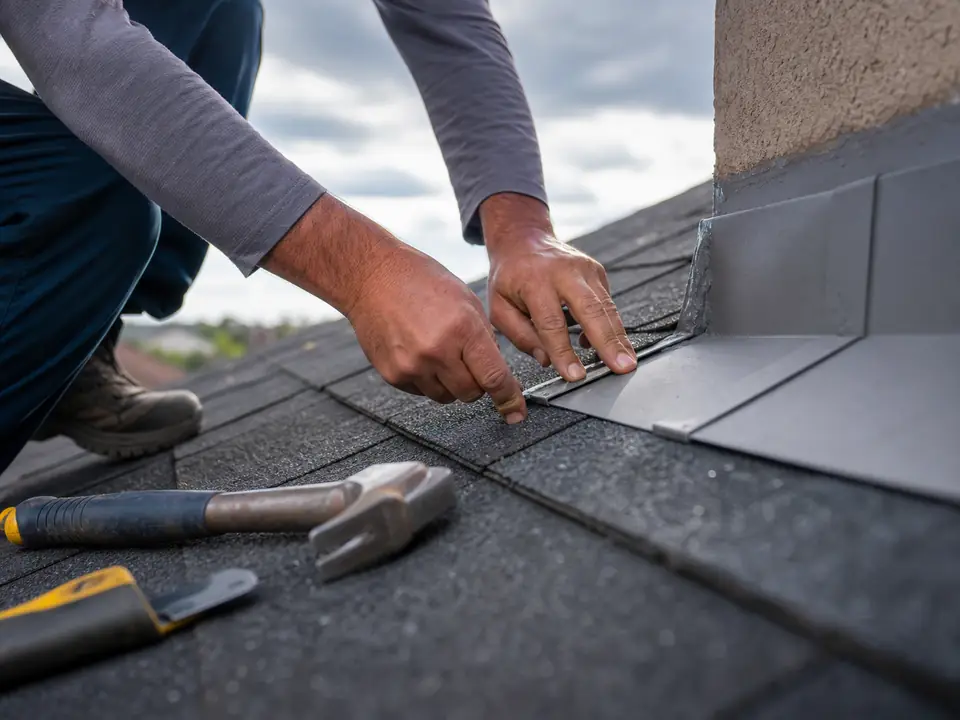
LaredoRoofer repairs residential and commercial roofs throughout Laredo, including leaks involving shingles, metal roofing, flashing, penetrations and low-slope commercial systems.
Finding the Source of a Roof Leak
The location of a ceiling stain provides useful information, but it does not always identify the exterior entry point.
Water can enter farther up the roof and move along the underside of the deck or framing. It can also follow a pipe, wall or other building component before reaching the interior finish.
An inspection therefore starts with the evidence inside and compares it with possible exterior failure points.
These can include:
- damaged or missing roofing
- plumbing vents
- roof-to-wall flashing
- valleys
- roof edges
- metal seams
- commercial membrane seams
- rooftop equipment
- previous repair areas
The repair becomes much easier to define once the water path makes sense.
Damaged and Missing Shingles
Missing shingles expose the layers below them to weather.
Replacement is often practical when nearby shingles remain flexible enough to work with and the underlying area has not suffered broader damage.
The condition surrounding the missing material is important.
A replacement shingle needs to integrate into existing courses. If nearby material is badly deteriorated or breaks while being lifted for the repair, a larger area may need attention.
Flashing Repairs
Flashing is used where the roof changes direction or meets another building component.
Typical areas include:
- roof-to-wall intersections
- valleys
- pipes and vents
- chimneys where present
- dormers
- transitions between roof sections
Flashing works by directing water back onto the weathering surface of the roof.
When flashing has been poorly integrated, repeatedly covering the joint with exposed sealant may stop water temporarily without correcting how the detail handles rain.
The better repair depends on how the flashing should have been incorporated into the surrounding roofing.
Pipe Boots and Roof Penetrations
Every pipe or vent through a roof interrupts the weathering surface.
These penetrations are therefore common areas to inspect when leaks develop.
The roofing around the opening may still be serviceable while the boot or flashing component has deteriorated.
This can make penetration leaks good candidates for localized repair when the surrounding roof remains in acceptable condition.
Roof Valleys
Valleys collect water from two adjoining roof slopes.
That concentrated flow means the roofing and flashing in the valley have to remain properly aligned and unobstructed.
Damage, debris, installation problems or deterioration in a valley can become much more noticeable during heavy rain.
Repairs need to restore the intended water path through the entire affected section.
Roof-to-Wall Intersections
Water frequently finds trouble where a roof runs into a vertical wall.
These areas need properly integrated flashing so rain moves from the wall onto the roof covering and continues toward the roof edge.
When interior staining appears near an exterior wall, the roof-to-wall transition should be part of the investigation.
Previous Roof Repairs
A roof that has already been repaired deserves a closer look at both the new and old work.
A recurring leak can occur because:
- the original source was misidentified
- the repair material was incompatible
- surrounding roofing continued to deteriorate
- movement opened the repair again
- a related flashing detail was never addressed
The fact that an area was previously repaired does not automatically mean the whole roof needs replacement.
It does mean the reason for the repeat failure should be understood before another repair is added.
Shingle Roof Repair
Shingles work as overlapping courses.
A repair needs to preserve that pattern so rain can continue moving down the roof without being directed beneath nearby material.
Fastening position, shingle condition and the ability to integrate new material all affect the repair.
On older roofs, exact color matching may also be difficult because existing shingles have weathered for years.
That cosmetic difference should be discussed separately from whether the repair can be made watertight.
Metal Roof Repair
Metal roofs require a different diagnosis.
Standing-seam roofs and exposed-fastener roofs are built differently and develop different maintenance issues.
Areas to check include:
- seams
- exposed fasteners where used
- flashing
- penetrations
- panel ends
- transitions
- closures
- previous sealant repairs
Metal also changes dimension as temperatures rise and fall.
If repeated movement is contributing to a failure, simply sealing the visible opening may not provide a durable result.
Commercial Roof Repair
Commercial low-slope roofs often contain a large number of details in a relatively small vertical profile.
Leak investigation may include:
- membrane seams
- drains
- scuppers
- roof hatches
- rooftop equipment
- curbs
- pipe penetrations
- parapet walls
- perimeter flashing
The existing membrane also needs to be identified before repair materials are selected.
TPO, modified bitumen and metal roofs are different systems and should be repaired accordingly.
When Repair Is Worth Doing
Repair usually makes sense when:
- the failure is localized
- surrounding material remains serviceable
- the cause can be corrected
- compatible materials are available
- the repair can be integrated without damaging a much larger area
Repair preserves roofing that still has useful life.
When Replacement Becomes More Practical
Replacement deserves consideration when the problems extend well beyond one repair area.
Examples include:
- several unrelated leaks
- deterioration across multiple roof slopes
- repeated repair calls
- roofing material that can no longer be worked without breaking
- widespread commercial membrane deterioration
- underlying conditions affecting a significant portion of the assembly
At that point, the question is no longer whether one more leak can technically be patched.
The more useful comparison is how much additional service repeated repairs are likely to buy compared with a planned replacement.
Roof Repair FAQs
Why does my roof leak only in heavy rain?
Heavy or wind-driven rain can reach flashing and roof transitions differently than lighter rainfall. A marginal detail may remain dry during a normal shower and leak only when more water or a particular wind direction reaches it.
Can a leak be repaired from inside the attic?
Interior access can help identify the water path, but the exterior entry point still needs to be corrected. Interior patching alone generally does not restore the weathering surface of the roof.
Can an older roof still be repaired?
Yes, depending on condition. The roofer needs enough sound surrounding material to integrate the repair properly.
Why did a previous repair begin leaking again?
The original failure may have returned, surrounding material may have deteriorated or the initial repair may not have addressed the true source.
Can you repair commercial roof leaks?
Yes. The first step is identifying the existing roof system and locating the likely defect.