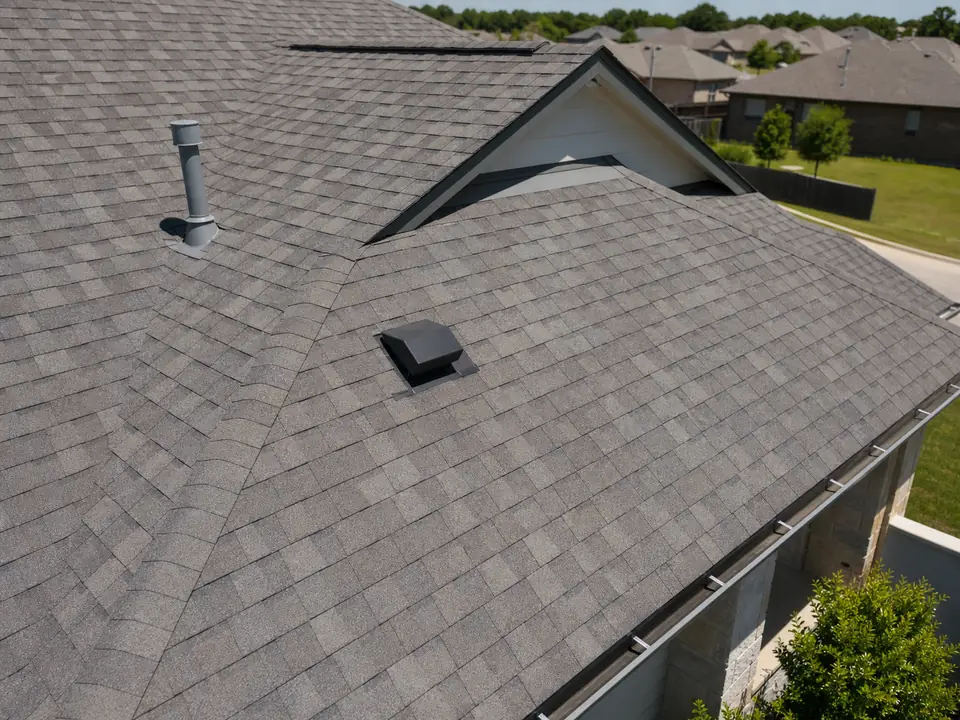
Leaks, damaged roofing, wet areas and adhesion problems should be addressed before the coating system is installed.
Which Roofs Can Be Coated?
Suitability depends on the existing roofing system and its condition.
The inspection should review:
- membrane or metal condition
- leaks
- previous repairs
- seams
- flashing
- penetrations
- corrosion where applicable
- drainage
- existing coatings
- surface cleanliness
- product compatibility
The coating manufacturer may also require adhesion testing or other preparation before application.
Repair Comes Before Coating
A coating is not a replacement for missing flashing or failed roofing material.
Necessary repairs are completed first.
On a metal roof that may involve fasteners, seams, penetrations and corrosion.
On a membrane roof, damaged areas and flashing details may need repair before the surface is coated.
Surface Preparation
Coatings need a properly prepared substrate.
Depending on the roof and product, preparation may include:
- cleaning
- removal of loose material
- drying
- rust treatment
- primer
- seam treatment
- adhesion testing
Skipping preparation can compromise an otherwise suitable product.
Silicone Coatings
Silicone systems are used on suitable commercial roofing substrates and are known for weather and ultraviolet resistance.
Individual products differ in application requirements, thickness and compatibility.
The existing roof still needs to meet the manufacturer's conditions before application.
Acrylic Coatings
Acrylic elastomeric coatings are another restoration option on compatible roofs.
They provide a reflective finished surface but have their own application and weather limitations.
The contractor should select coating chemistry according to the roof rather than choosing one product for every building.
Reflective Roofing in Laredo
Reflective membranes and coatings can reduce the amount of solar energy absorbed by the roof surface.
That can be particularly relevant on large low-slope commercial roofs exposed to Laredo sun.
Energy performance still depends on the entire building, including insulation, HVAC equipment and operating conditions.
Actual energy performance varies with the building, insulation, HVAC operation, roof assembly and how the property is used.